
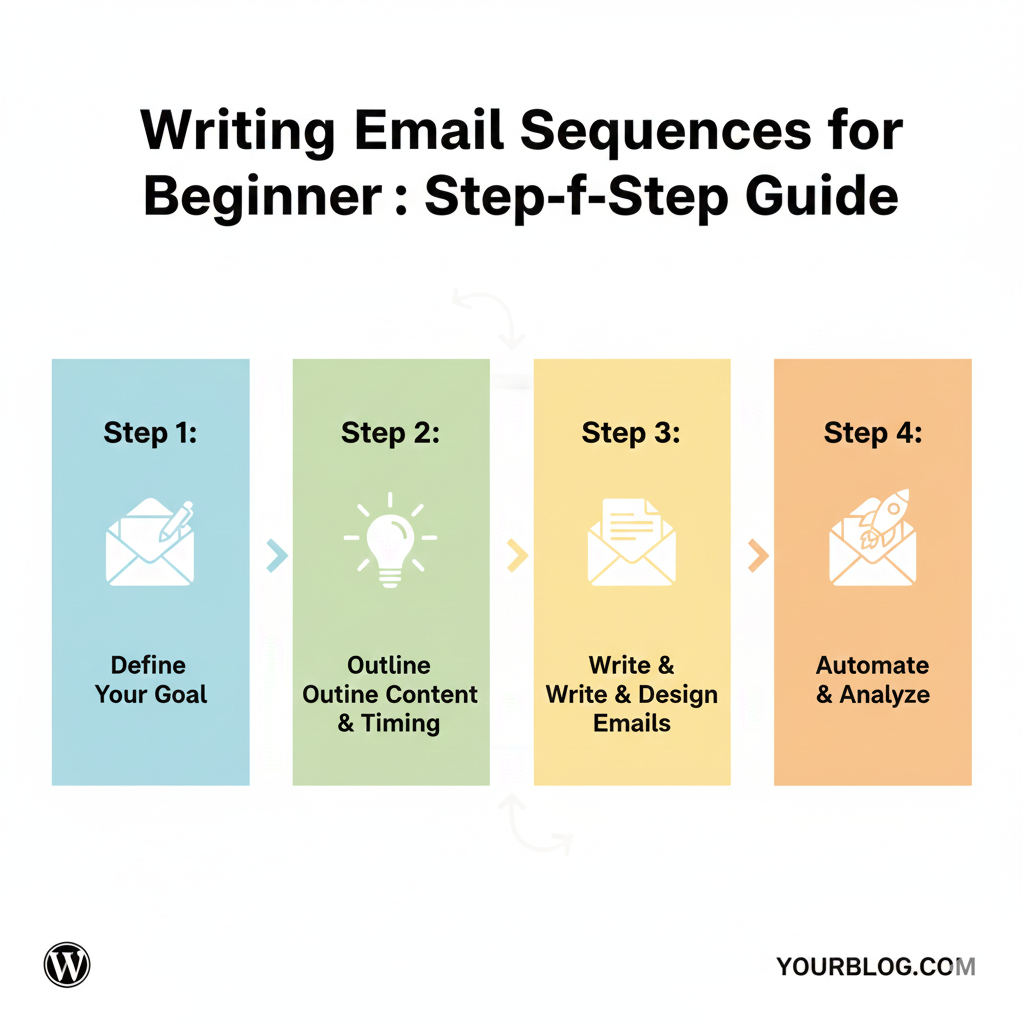

Email sequences are one of the most powerful tools in digital marketing. Instead of sending one-time emails, an email sequence automatically delivers a series of emails to your subscribers based on time or actions.
If you’re new to email marketing, this beginner-friendly guide will help you understand what email sequences are, why they matter, and how to write high-converting email sequences from scratch.
✅ What Is an Email Sequence?
An email sequence is a set of pre-written emails that are automatically sent to subscribers over a period of time. These emails are designed to:
- Build trust
- Educate your audience
- Nurture leads
- Promote products or services
- Increase engagement and conversions
Common Types of Email Sequences:
- Welcome sequence
- Lead nurturing sequence
- Sales sequence
- Onboarding sequence
- Re-engagement sequence
✅ Why Email Sequences Are Important
Here’s why every beginner should use email sequences:
- ✅ Works 24/7 on autopilot
- ✅ Builds a relationship with subscribers
- ✅ Increases conversions and sales
- ✅ Saves time and effort
- ✅ Delivers consistent communication
✅ Step-by-Step Guide to Writing Email Sequences for Beginners
Let’s break down the process into simple steps.
🟢 Step 1: Define Your Goal
Before writing anything, decide what you want to achieve.
Common goals include:
- Lead nurturing
- Product promotion
- Course enrollment
- Free trial signups
- Customer onboarding
Your goal will decide your email content and structure.
🟢 Step 2: Know Your Audience
Ask yourself:
- Who is my ideal reader?
- What problem are they trying to solve?
- What language do they understand?
- What motivates them to take action?
✅ The better you understand your audience, the better your results.
🟢 Step 3: Choose the Right Type of Sequence
For beginners, the most important sequences to start with are:
- Welcome Sequence (3–5 emails)
- Nurture Sequence (5–7 emails)
- Sales Sequence (3–6 emails)
🟢 Step 4: Plan Your Email Structure
Each email in your sequence should follow a simple structure:
- Subject Line – Grabs attention
- Opening Line – Connects emotionally
- Main Message – Delivers value
- Call-to-Action (CTA) – Tells readers what to do next
✅ Example: Simple Welcome Email Sequence (Beginner-Friendly)
Email 1: Welcome & Introduction
- Introduce yourself
- Thank them for signing up
- Share what they’ll receive next
Email 2: Provide Valuable Content
- Share a useful tip
- Give a quick win
- Build trust
Email 3: Share Your Story
- Why you started
- Challenges you overcame
- How you help others
Email 4: Soft Promotion
- Introduce your product or service
- Share benefits
- Add social proof
✅ Tips to Write High-Converting Email Sequences
✔ Write like you’re talking to one person
✔ Keep emails short and clear
✔ Add storytelling
✔ Focus on benefits, not features
✔ Use only ONE CTA per email
✔ Avoid spammy words
✔ Personalize with name and tags
✅ Common Mistakes Beginners Should Avoid
❌ Sending too many emails at once
❌ Writing sales-only emails
❌ Not adding a clear CTA
❌ Ignoring mobile users
❌ Using complicated language
❌ Not testing subject lines
✅ Best Tools to Create Email Sequences
Some beginner-friendly tools include:
- Mailchimp
- MailerLite
- Brevo (Sendinblue)
- ConvertKit
- GetResponse
All of these platforms offer automation and email sequence builders.
✅ Final Thoughts
Writing email sequences may seem difficult at first, but once you understand the structure, it becomes simple and extremely powerful. A well-written email sequence can build relationships, grow your brand, and generate consistent sales on autopilot.

Leave a Reply