

In today’s competitive digital landscape, simply attracting website visitors isn’t enough. To grow sustainably, businesses need a structured system that guides potential customers from first contact to final purchase. That system is called a sales funnel.
A well-designed sales funnel helps you capture leads, build trust, nurture relationships, and convert prospects into loyal customers — all in a predictable and scalable way.
In this guide, you’ll learn what a sales funnel is, why it matters, and how to build one that actually drives results.
What Is a Sales Funnel?
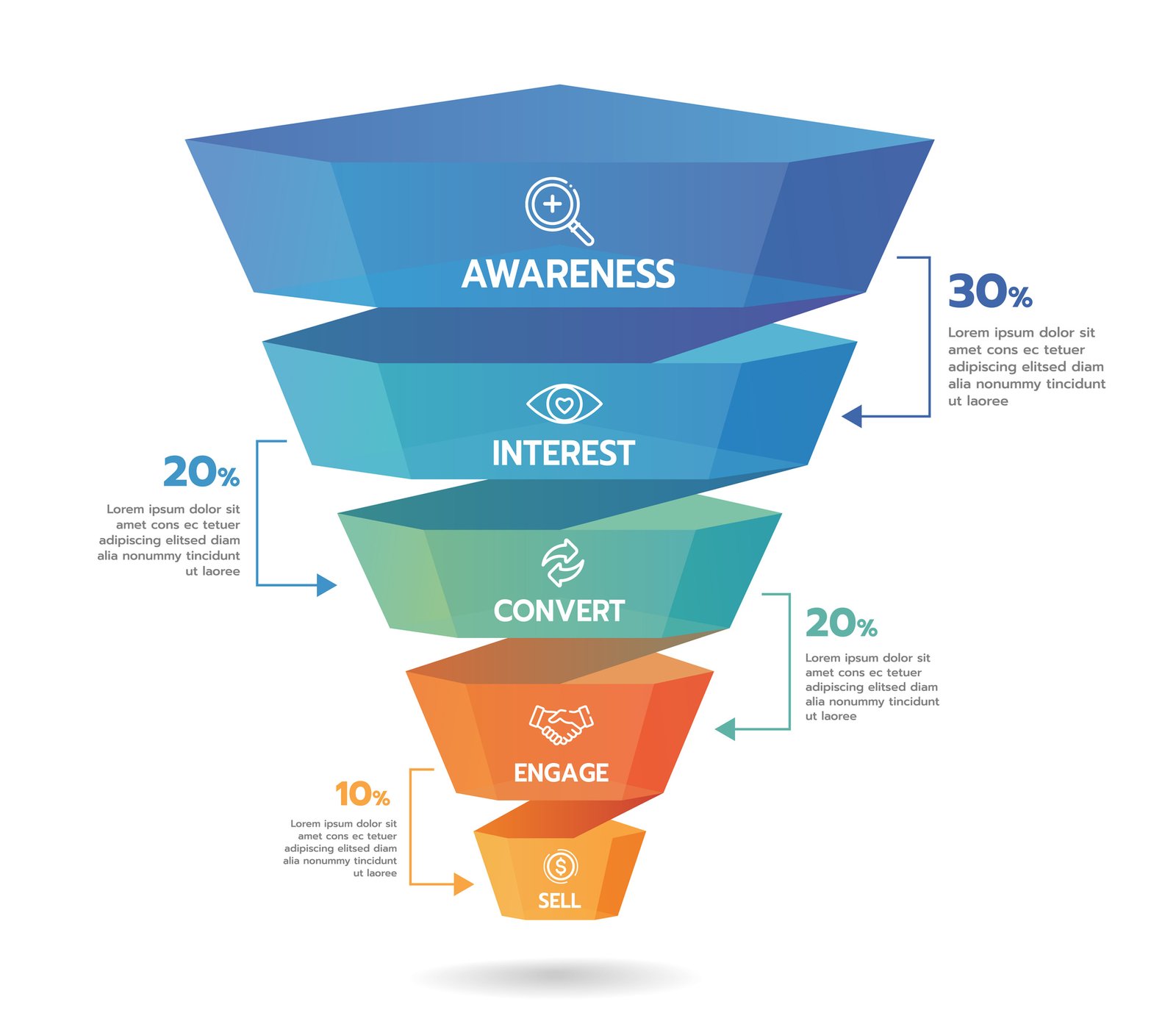
A sales funnel represents the customer journey — from discovering your brand to making a buying decision. It’s called a “funnel” because many people enter at the top, but only a portion move through each stage until they become paying customers.
Typically, a sales funnel has four main stages:
- Awareness – People discover your brand
- Interest – They engage with your content or offers
- Decision – They evaluate your solution
- Action – They make a purchase
Each stage requires a different strategy, message, and type of content.
Why Building a Sales Funnel Is Important
Without a funnel, marketing efforts are often scattered and conversions become unpredictable. A structured sales funnel allows you to:
- Understand customer behavior at every stage
- Deliver the right message at the right time
- Improve conversion rates systematically
- Automate follow-ups and nurturing
- Measure performance and optimize results
In short, a sales funnel turns random traffic into a repeatable revenue process.
The Core Stages of a High-Converting Sales Funnel
Let’s break down how each stage works and what you should focus on.
1. Top of Funnel (TOFU): Awareness
This is where potential customers first find you. Your goal here is visibility and value.
Common TOFU strategies include:
- Blog posts and SEO content
- Social media marketing
- YouTube videos and webinars
- Free guides or checklists
- Paid ads
At this stage, avoid hard selling. Instead, focus on educating and solving problems.
2. Middle of Funnel (MOFU): Interest & Consideration
Now that visitors know you, it’s time to build trust.
Here you nurture leads using:
- Email sequences
- Case studies and testimonials
- Free trials or demos
- Educational webinars
- In-depth resources
Tools like Mailchimp or HubSpot can help automate email nurturing and lead management during this phase.
3. Bottom of Funnel (BOFU): Decision & Conversion
This is where prospects decide whether to buy.
Effective BOFU elements include:
- Clear pricing pages
- Limited-time offers
- Product comparisons
- Strong calls-to-action (CTAs)
- Simple checkout processes
Removing friction is critical here. Make it easy for customers to say “yes.”
4. Post-Purchase: Retention & Upsell
Your funnel shouldn’t stop after the sale.
Happy customers can become repeat buyers and brand advocates through:
- Onboarding emails
- Exclusive content or communities
- Upsell and cross-sell offers
- Feedback surveys
Retaining customers is often more cost-effective than acquiring new ones.
How to Build Your Sales Funnel (Step by Step)
Here’s a simple framework you can follow:
Step 1: Define Your Target Audience
Understand who your ideal customer is, their challenges, and what motivates them.
Step 2: Create a Lead Magnet
Offer something valuable (ebook, checklist, free class) in exchange for email signups.
Step 3: Build Landing Pages
Design focused pages with clear headlines and CTAs to capture leads.
Step 4: Set Up Email Nurturing
Send helpful, educational emails that gradually introduce your product or service.
Step 5: Present Your Core Offer
Guide leads toward your main product with compelling benefits and social proof.
Step 6: Track and Optimize
Use analytics platforms like Google Analytics to monitor conversions and identify drop-off points.
Continuous optimization is what turns an average funnel into a high-performing one.
Common Sales Funnel Mistakes to Avoid
- Driving traffic without a clear follow-up process
- Asking for a sale too early
- Ignoring mobile optimization
- Using weak or confusing CTAs
- Not tracking performance metrics
Avoiding these pitfalls can dramatically improve your funnel’s effectiveness.
Final Thoughts
Building a sales funnel isn’t about complicated tools or aggressive selling — it’s about guiding your audience through a thoughtful journey. When done right, a sales funnel creates trust, delivers value, and converts prospects naturally.
Whether you’re selling digital products, services, or online courses, a structured funnel gives you clarity, consistency, and scalable growth.
Start simple, focus on your audience, and refine your funnel over time. The results compound.

Leave a Reply